Wednesday was a return to gusty westerly winds and a return to a reefed mainsail and the No 1 jib. The rest of the brave fleet sailed with full mainsails which made for interesting comparisons.
Downwind while the wind was blowing 19 knots we pulled away from the fleet but as soon as the breeze died to 7 knots we slowed and when the fresh breeze returned the fleet ran down to us.
We managed to round the downwind mark behind the First 40, Alibi, and had a good tussle with them up the next windard legs to just round the windward mark in front,
On the next downwind leg we held the lead but on turning for the last windard leg home they rounded better and regained the lead. We were slowly slipping behind Alibi and did not notice the fast finishing Amanti who picked the last two shifts brilliantly to take second fastest.
Our biggest issue going to windard was that we did not have the foot of the reefed sail pulled out flat and so lost a lot of the advantage of the reefed main.
Other possibilities were that we had the vang on too tight not letting the main free in the gusts, possibly the jib was not sheeted tightly enough and possibly we were not watchfull enough for the wind shifts.
I bear the blame for much of this. I had stabbed my hand on the ring holding the tiller extension to the tiller and was bleeding all over myself and the boat. I have fixed that fitting now but should have done so long ago and then I might have paid more attention to the wind angles.
On the jib sheeting issue it is again my fault. Dudley Dix would have installed larger winches and while they are larger than on Passion X they could be larger given the age of the crew. No offence meant guys we are all getting older.
Now the vang could have been eased. I did look up a few times and thought the leech was too tight for the conditions but said nothing.
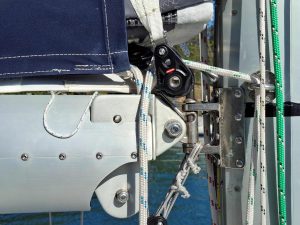
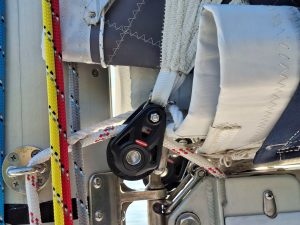
While taking the blame for all these issued I might as well add the reefing system to the list. The first reef point has a block on the sail with the reef line coming out of the top of the boom and then down to the mast base. The luff tension is the only thing holding the reef point up out of the boom. Other reefing systems have a lead on the mast which stops the reefing line pulling the tack reef point down too far. We have already damaged the block by pulling it into the boom and I should have modified the system sooner.
The standard single line reefing system shown on the North Sails guide has a fairlead on the mast so that once the angle of the reef line is flat enough the foot clew can be wound in without the tack ending up clashing with the boom. https://www.northsails.com/en-au/blogs/north-sails-blog/slab-reefing-systems-tips-for-reefing-north-sails
I did have in stock some mast fairleads supplied by Allyacht spars for a previous mast so I set out to replicate the North Sails diagram as much as possible.
On a sunny, windless Friday I hoisted the main on the mooring and set about marking the positions for the fairleads. Each fairlead is attached to the mast with four quarter inch stainlees metal threads. In this area the mast is sleeved so the depth of aluminium is significant and the holding power should be more than adequate.
It took all afternoon to drill and tap the holes but with care no drill bits were destroyed and no taps broken. The hardest job was getting enough pressure on the drill to get a good bight on the aluminium as the fitting are chest high.
In all the reefing systems I have seen the reef line enters the mast fairlead at a very sharp angle and while the leads are well rounded it might be better to try to fit a block onto the fairleads so I have some experimenting to do. In the meantime the reefing should be much more effective.
Yesterday was the first opportunity to test the light air genoa I described in the last post. When the sailmaker had finished making the sail it was measured for ORCi club and IRC handicap and I updated the ORCi rating for the coming season. The APH, All Purpose Handicap, TOT, Time on Time went from 1.2357 to 1.2426 which appears a small penalty for the improved performace that I expect. The rated area came in at 49.54 m2 which is a little less than expected but a big jump up from the 42 m2 of the No1 Jib.
The breeze was forecast to be around 6 knots with the occasional gust to 9 kts and well below the upper limit of the sail so we set it up full of anticipation.
The start was downwind in a Westerly breeze forcasting to shift to the North. Right on the start the breeze went a little north so we started with a reaching line out to leeward and immediately pulled away from everyone except the light air downwind specialists, a Flying Tiger and a sports boat with a huge genoa. While the breeze was on the beam and fresh we kept pulling away but as it died and went aft the fleet came back at us with breeze and three yachts sailed by.
Some of the crew thought we should have poled out the genoa but as it was our first use I wanted to be conservative and as the breeze was flicking around I was happy with my decision. At the end of the run we rounded outside three yachts, A First 40, a Sydney 36 CR and a RP 36. We managed to round tighter being the fourth of the group and immediately pointed above these three. Perhaps we experienced on of the flicks to the North that had been coming across the fleet but whatever the reason we were soon above and ahead and chasing the light weight leader.
As our first competetive beat to windward I was getting a lot of advice and most of it excellent. Halyard tensions were adjusted as were sheet tensions and I had no time to look where the competition was heading. To complicate the matter we tacked below the second fleet which rounds a shorter distance mark and some of them are hard to tell apart from our Div 1 fleet.
My crew kept reassuring me we were ahead of our competition except for the lighweight Britannia and pulling away. It turns out that they were right and at the first opportunity to look I could not see the trailing Div 1 fleet buried amongst the Div2 fleet.
The latter part of the windward work was a reach away to a turning mark down in Rose Bay where we were going neck and neck with Britannia but then it was a windward work to the Naval mooring buoy. On this leg we got a lucky break with the wind strength across the course and finally caught Britannia. On the next leg the wind had turned west again meaning it was dead square so we had to pole out the genoa and to our pleasant suprise we kept Britannia at bay and did so for the final beat to the shortened course finish.
We scored fastest time by a minute and the yachts that rounded the first mark with us were 8, 9 and 13 miutes behind.
Out tacking angles were not great but we had good speed and perhaps we had a better run of the wind shifts. Indeed the first work to the West to the Naval mooring buoy was a single beat for much of the leg while the second work was dead into the breeze so it is hard to exprapolate yesterdays performance to future races.
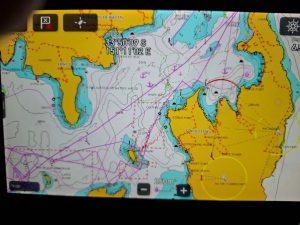
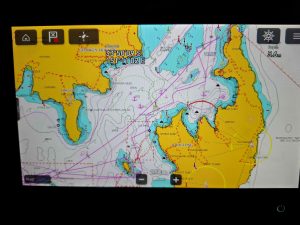
I am looking forward to more light wind races to confirm the results from yesterday. On the other hand if it is fresh we know we can do well particularly with the fresh air downwind legs where our higher prismatic coefficient on our long waterline length makes for fast running. The second set of tracks above show our angles from the prevous week when the breeze was around 15 knot and we managed a fastest times by just 5 seconds.
A special thanks to Dudley Dix our naval architect who took our Didi 40 Cr design and created the new Didi 120 which is proving to be a formidable yacht in the 40 ft range.
Also a special thanks to long time friend and Sailmaker, Andrew OBrien for this new genoa made to fit the tight tolerances of our rig and set between the inner diagnoals, the outer verticals and below the lower spreaders.
Two weeks age we salvaged a 4th fastest place in a light wind drift. The race started in 5 knots of breeze but that faded and we ended up finishing in no wind on a shortened course. We were delighted to salvage 4th place on fastest times although a last on handicap. By absolute contrast the race on Wednesday this week was conducted in 12 to 15 knots with gusts possibly as high as 20 knots. Right from the start we powered to the front of the fleet and were closely followed by Marloo and Amanti. Once on the work the power of Passion XI and Marloo stood out as we drew away from the fleet to eventually finish a couple of minutes in front with Marloo taking the handicap honours and Passion XI second with a good gap to third on handicap.
It is very clear that we do well with winds over 12 knots but we lack the large overlapping genoas of Marloo and Allegro in the light airs. Further we carry a big handicap from our heavy air performances into the light air races so no mid fleet places are likely on handicap.
To fill the light air gap I tried the code Zero off of Passion X as a headsail and it was very effective in a narrow range of breezes but too much overlap for really light air and not suitable for really tight works.
From the beginning the rig of Passion XI was designed for a small overlap genoa that would sheet between the outboard V1s and the inboard D1s but the modelling I ran on the ORCi website showed only a small increase in speed. After trying an overlapping genoa off of Passion X it seemed that the performance would be much better than the programms were showing. For a tiny hit to the rating we could get a combination that would excel in 4 to 12 knots and not be so big as to be counterproductive in drifting conditions.
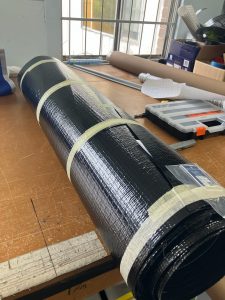
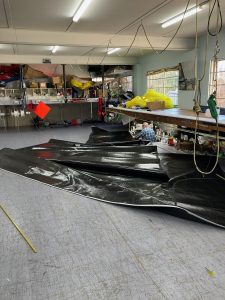
Our sailmaker worked with us to design a light overlapping genoa that just grazes the lower spreaders. It is designed to be powerful for the light airs and light enough to set in light airs. The area should be just over 50m2 which is 9m2 up from our jib so hopefully it will improve the very light air windward and reaching performances. Remember that this is mainly two sail sailing and no extras are allowed. The forecast improvement with the wind forward of 90 degrees suggests the sail will be well worth the rating hit.
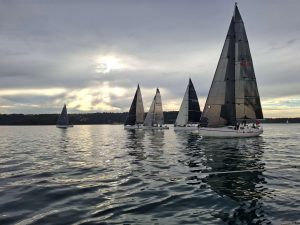
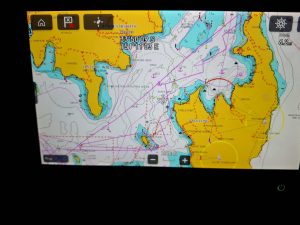
We are five weeks into the Winter Wednesday Series run out of RANSA and it has been an interesting start. The first race was run as a non point score due to an extensive change in courses. This gave the organisers an opportunity to move boats between the fleets. In our Division 1 we lost the Sydney 38s, Agrovation and Love Byte and gained the big Marloo. The Div Zero course was shortened so that the smaller yachts in that division could finish in a respectable time.
We liked the course change as the Div Zero yachts were rounding Lady Bay at the same time as the lead boats in Div 1 and that gave us good opportunity to check our performance against them. Unfortunately, the combined fleet mark rounding was not to everyone’s liking and their course will change from next week.
In the heavy air races we have scored two fastest times and one second fastest while in the non point score light air race we could manage only a sixth fastest place. We are still learning how to sail the yacht in the heavy airs and this week was the first race with a reef in the carbon main. I feel we can improve our windward performance in 20 knot conditions if we can sail a slightly lower angle and to achieve this we will try sheeting the jib further back on the tracks and a little more wide at the spreaders.
To address the light air competitiveness, we need an overlapping genoa. The No 1 jib needs 8 knots for the top batten to follow the shape. After trying lighter and lighter battens we reduced it to just a leech batten. Yhe short batten did now work and we are reinstalling the softest full length one. Luckily we have a very understanding sailmaker. So I think we have gone as far as we can with the jib. The large code Zero from Passion X proved too large for normal fleet racing. it would have been a huge hit to the ORC rating and been useful only on long tight reaches so it will be retired to the garden shed. In its place we will try a conventional 140% overlapping genoa set between our gunwale wide V1s and our cabin side D1s. It will be designed to just clear the lower spreaders and should achieve an area of close to 50m2. That will be a big jump up from the 42 m2 No1 jib and should make a difference. I tested an overlapping genoa from Passion X and it seemed to work well despite being only 40 m2. The genoa will be without battens so there should be no issues in light airs.
The VPP available on the ORC website show a small speed increase up to 10 knots of breeze and no loss of performance above that. In my heart I feel the low air performance will be much better than the VPP predicts particularly in low wind close reaching. A bonus it the hit to the ORC rating is tiny going from 1.2357 to 1.2443.
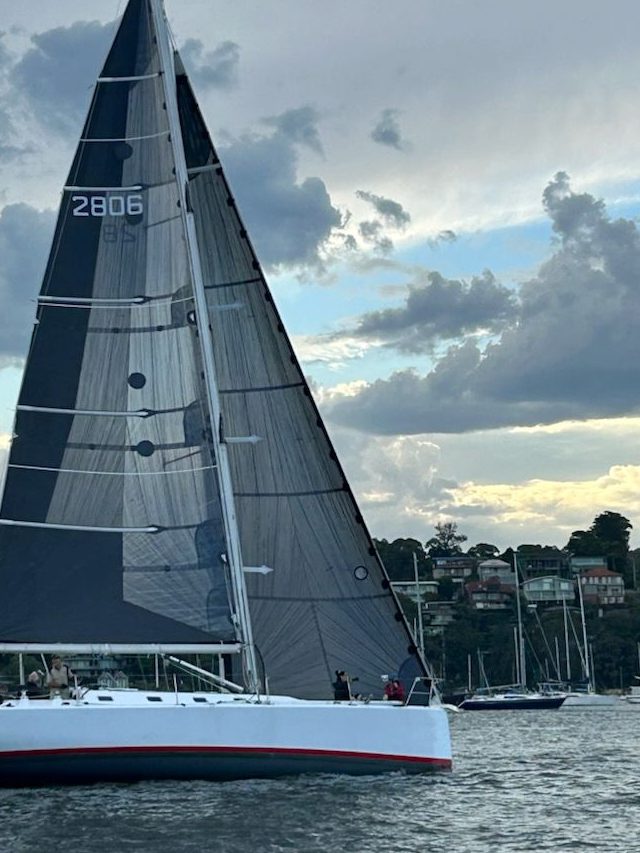
Following the exciting fastest times in the windy conditions we had less success in the next medium air race. The overriding issue was that we went right to stay out of the tide while the shift came from the left and was a progressive shift that through the one long windward leg clocked around 25 degrees. This was a classic caught on the wrong side as we never got a lift back. Britannia was over the same side and apart from a very short burst out of Watsons Bay they were also badly affected by being on the wrong side. The long square run to Shark Island was not helpful as the fleet seems to sail at similar speeds. Once on the reaching legs from Shark Island to the Naval buoy No 3 we started to make up ground and by the end of the race has made up a couple of minutes but the early damage was irrepairable.
It does not seem time to panic unless you look at the current forecast for next Wednesday which looks very much like a light weather specialist race and a handicap improver for Passion XI. It is going to be character building.
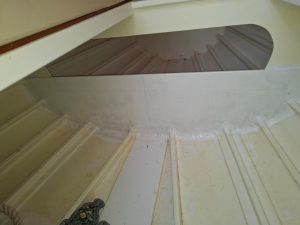
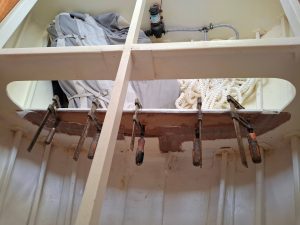
Now is confession time as prior to going to Port Stephens we found fractures in the bulkhead under the V berth. These were attributed to very heavy slamming conditions going out or Pittwater when we were motoring directly into the short sharp chop. In consultation with the designer we identified the problem and instituted an immediate repair before heading off the Port Stephens. The thickness of the bulkhead plywood was insufficien for the size of the cutout in it so the plans were quickly upgraded. For our frame with a large cutout we reinforced the 9mm ply with a 12 mm ply panel which was 370 mm tall rather than the 200 mm of the original. The repair worked perfectly and while we experienced similar slamming conditions coming out of Port Stephens on the way back home the reinforced bulkhead survived well. Subsequently I have augmented the original 9mm ply by 200 mm high with a panel that creates a full 21mm thick ply panel 370 mm high with the join between the originl 9mm ply and the new 9mm ply addition glassed over with two layers of 425 gm double bias glass. It is all smoothed and painted with two coats of two pack epoxy and looks like it was always meant to be thus.
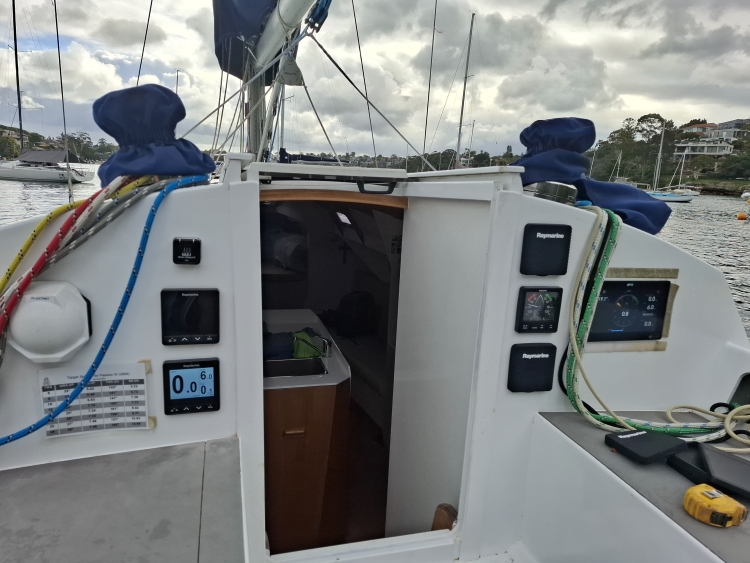
A problem with Passion XI in racing is the crew (whose mothers were not glass makers) working the winches right in front of the starboard mounted instruments.
Thanks to a Whitworth’s super special David has acquired an extra Raymarine i70s instrument at a good price and installed it on the port side of the bulkhead as pictured above.
This additional information display will allow David to see wind direction, speed and depth duplicated from the starboard side instrument bank when the crew is in front of the starboard side instruments.
After a week in Nelson Bay waiting for wind and sea state to abate it was time to head home. We did a very long day from Port Stephens to Pittwater and then a short hop from Pittwater home. The swell out of Nelson Bay was still very rough but after Newcastle it was a very quiet motor sail.
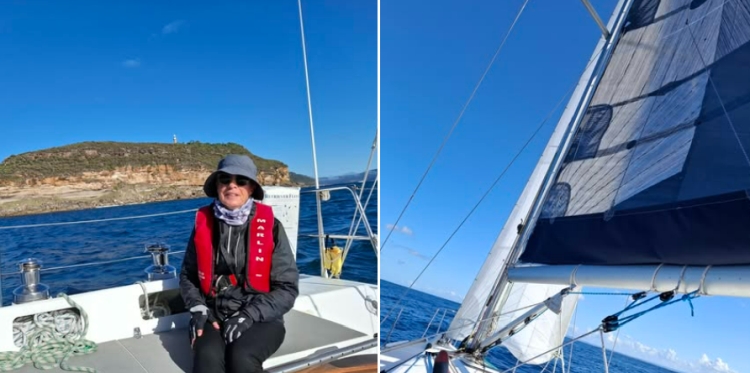
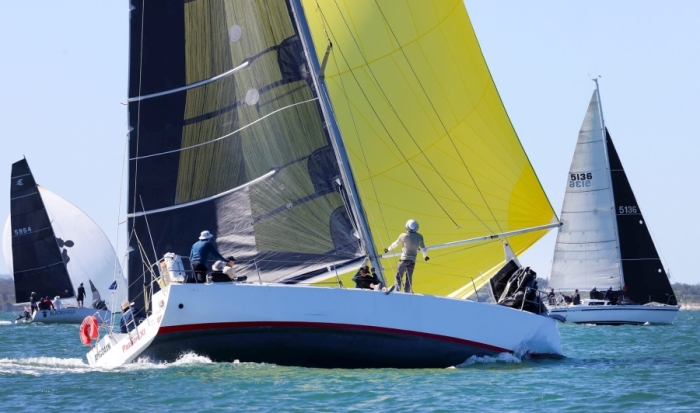
There were 122 yachts in the 2026 Commodores Cup split into five roughly speed based fleets. Passion was in Division 2 of 28 boats. We had five great days of racing with two offshore races which, once the wind settled, provided perfect sailing conditions. There were three inshore races with the last one in good strong breezes and the other two in some challenging variable wind and tide affected races.
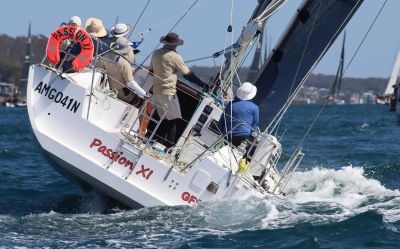
A few boats in the inshore races managed to trouble the sand crabs running aground in various parts of Port Stephens. Passion managed to a keel kiss off Corlette.
The racing was very close and competitive. After a slow start with steady improvement in settings and spinnaker work each day Passion managed to climb to finished 15 on scratch and 13th on handicap at the end.
Full results are Here.
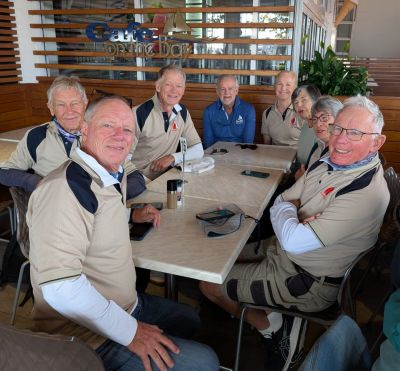
David and Elaine waited out the strong southerly system which swept through after the Commodores cup before completing the sail home on 25th and 26th April with an overnight stop in the Basin in Pittwater. It proved a wise decision as waves built to 4 metres from the south and one yacht was written off at Fingal during the weather event.
There are more pictures of Passion and crew at SPS on our Photos Page Here.
Passion XI is now safely back on its mooring at Greenwich after a campaign in the Newcastle to Port Stephens Race 12 April and Sail Port Stephens Commodores Cup 13-18 April .
After an early start the delivery motor/sail from Sydney Harbour to Port Newcastle on 10th April was uneventful with 5-8 knot N to NE breeze on the nose and the mainsail was set to stabilise the boat. The next day was spent at the Newcastle Cruising Yacht Club marina getting Passion XI in tip top shape for the coming events.
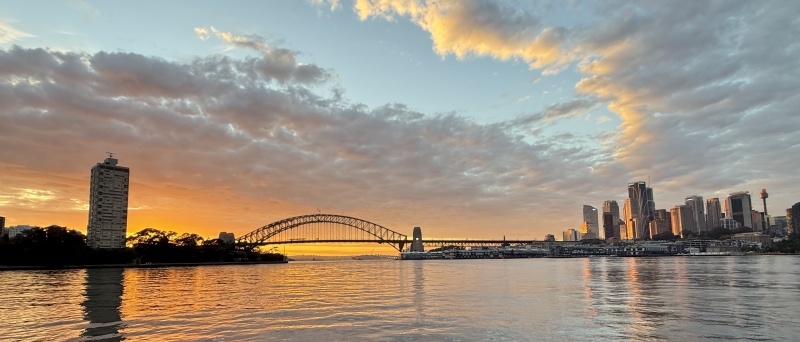
There were 42 boats in the Newcastle to Port Stephens race and it was a cracker with a 20-30 knot SW breeze driving the yachts along the relatively protected Stockton Bight at a record pace.
The first yacht on scratch and handicap by a big margin was the 30 ft Thompson 920 Road Runner which planed its way along the 26nm course from Newcastle Harbour to the finish off Fingal Light in just 101 minutes averaging 15.5 knots.
Passion sailed conservatively with full main and older fuller jib averaging 10 knots to finish 13th on scratch and 24th on handicap. Many boats provided excitement for their crews and other participants with asymmetric and code zero sails getting a flogging in the strengthening gusty breeze.
Full results are Here.
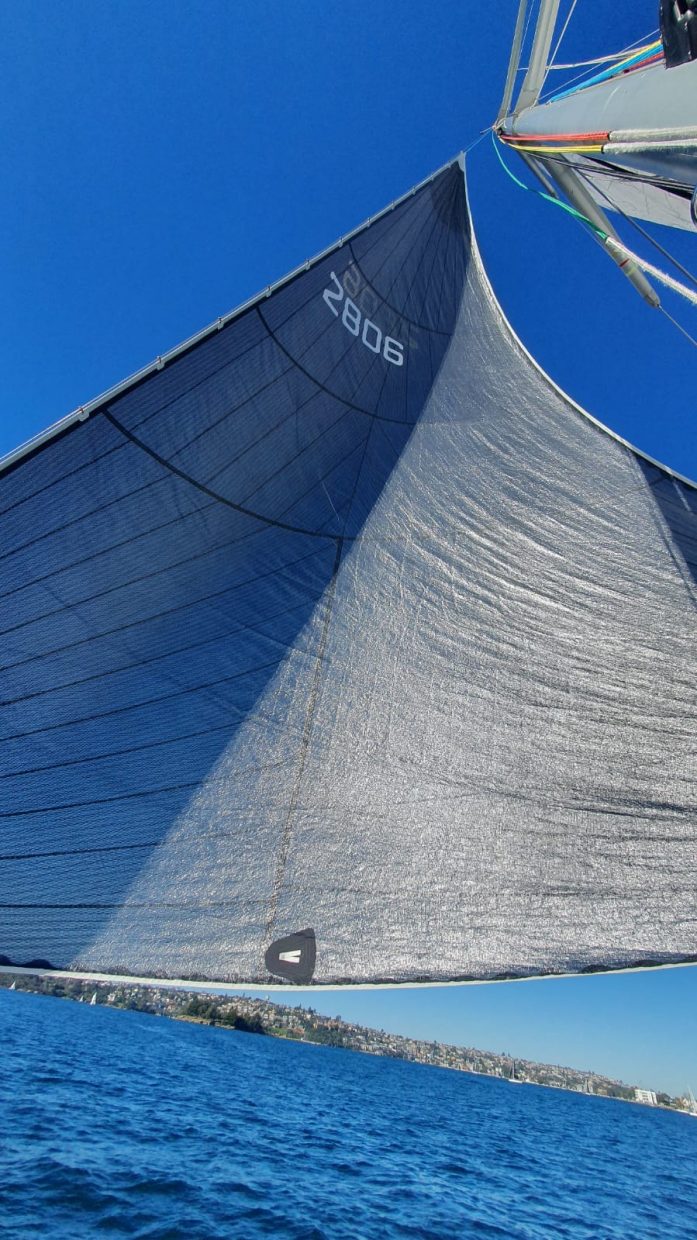
We have used the converted code zero from Passion X as a 180% genoa on Passion XI for four races. All four races have been in very light conditions which suits the large sail area.
Before converting the free flying sail to a hanked on genoa I ran velocity prediction programs on the ORC website and those predicted a 0.3 knot speed gain to windward.
In practice I feel we have gained all that speed in a straight line but offset by agonising long tacks. Admittedly we have been very lightly crewed on three of those four races so the slow tacking is also due to not enough grunt on the sheets.
With the experience of each race I have adjusted the tack and sheet angles so that now the upper leach touches the V2 at the same time as the foot touches the V1s and that has improved the tacking angles.
In my opinion the hanked on sail allows the yacht to point almost as high as the non overlapping jib and certainly much higher than a Code Zero on a furler.
On Passion XI we have a genoa take off 2.4 metres higher than on Passion X so if we made a new sail to fit the new geometry we would gain around 8m2 more sail area and the leach up high would cross the D3 and allow slightly tighter sheeting at the upper leach but the improvement would be marginal.
After a long break from posting I feel that I have time to post some blogs again.
It has been a very busy year since launching Passion XI as there was a lot of finishing touches to be added post launch.
We launched Passion XI without the Selden bow prodder, without the bow anchor roller and without the adjustable settee table and each job had challenges. The sails too were just in time recuts of little used DP Hydranet sails from Passion X which had been superceded by carbon sails. As Passion XI is a prototype I wanted to make sure the sailplan was optimum before investing in new carbon sails. After launch there was the process of measuring the yacht for ORC and IRC and getting in some racing.
On the sail front the new main on PXI was produced by adding 1.8 metres to the bottom of the sail from PX. The dimensions were ideal with the longer foot matching the leach angle on the PX sail. The one drawback was the cloth alignment out of the clew of the old sail which was now the first reef point. The cloth at the old clew was now not aligned with the stress angles coming up the from the new clew. Hopefully this will be solved with the new tapes added radiating out of the new clew. The luff round on the sail was perfect for the old mast but the new mast was deeper and the distance between the forestay and the backstay was less giving less mast bend even with maximum backstay tension. We have just recut the luff to better match the stiffer mast and look forward to getting back on the water.
There is a story around the recut hydranet jib which was a very little used No 3 on PX having had not a lot of use and been replaced with a carbon one. The new jib hoist is 2.4 metres higher than on PX and the J measurement 460 mm longer so the jib area is 10m2 more. Andrew O Brien did a magnificant job repurposing panels off the old sail and adding a lot of new panels to get the height and foot measurements. All the cloth in these panels was correctly aligned with the stresses but there had been some cross panel creep in the Hydranet which we had not anticipated. This means there is a bit of a soft spot in the old panels which is fine in light breezes but pretty apparent at high wind strengths.
With lessons learned we repurposed the almost new Hydranet No 4 from Passion X as a heavy air sail on PXI by moving the panels around and adding area. This now looks like it was made from scratch for the rig on PXI.
To address the light and medium air performance we commissioned a new Contender sailcloth ZZC-18 jib. As delivered we felt the jib was too flat for the lower end of the wind range and not wanting to add to our wardrobe we had the luff recut with more round. It probable did not help that we have the rig ultra tight to try to bend the mast for the luff of the main but now with the jib cut fuller and the main cut flatter we should be able to play tunes with the rig and get a bit more luff sag in the light breezes.
We will get the Hydranet No 1 recut with less luff round to match the more saggy headstay and hopefully reduce the bubble from the cross panel creep in the old section. This will make it a good 42m2 medium air jib before we switch to the 32m2 heavy air jib.
That is a lot about the sails now for the hardware.
The bow prodder and bow roller were challenging to fit as the distance from the anchor hatch to the bow fittings was too long for comfort. Indeed I was stuck in the bow locker trying to fit nuts to the bolts and without my phone at hand. After a long wriggle I did manage to work my way out but not without a degree of anxiety.
The problem was solved with threaded washers for the bow roller and threaded inserts for the adjustable bow prodder. Indeed I did the engineering calculations to ensure that the pull out strength of the inserts exceeded the strength of the bolts and it was indeed. The 36 mm epoxy plywood inserts do exceed the breaking strain of the bow fitting and is 150% of the bow ring fitting so that was a win for strength and removabilty.
On line I found the perfect three stage gas lift pedestal for the saloon table. By adding very large cleats to the super strong keel floors and creating a flat space across the keel strongback towards the settee I was able to use the same threaded inserts to secure the base and again the base is removable from above by extracting the bolts.
I have not run out of work yet but the urgent jobs are all complete and we gave PXI a very thorough sea trial by going to Port Stephens and back.
With Passion X our first trip back from Port Stephens was in a 35 knot southerly and we started with three reefs in the main and the small jib. Part way down the coast I lowered the jib and we proceeded on triple reefed main alone. That was in 2017. This time in PXI there was no such test but we did have very lumpy seas going out of Sydney Heads which gave the chainplates and rigging a good test.
The mild conditions on the way back meant a long run under motor and I think all systems are good.
Passion X is for sale. I built it to keep forever and but I had kept the building frame and thought I had one more 12 metre boat in me. I was right but only just as the aches and pains from overuse did become an issue. While these have all subsided I have learnt my lesson and dismantled the building frame. At home I am progressing slowly on a garden shed to house all the spare tools and sailing equipment and reclaim one side of the garage for a car.
In the meantime I am keeping Passion X in good order and we raced her last week at RANSA for a fourth on handicap. In the light air conditions and slightly off the breeze her 160% genoa is more effective than the 110% genoas on PXI and the rest of the fleet so we were up with the usual company and possily to their amazement.
That brings up an issue for PXI on how to manage the light air and just off the breeze angles and I am working on adapting a 200% code zero from PX to a 180% genoa for PXI. It is a bit of a gamble but the rating hit seems so small and the modelled speed gains so great that it worth experimenting with. It will be a couple of metres short on the hoist but I am happy to try a sail that breathes more in the head for this experiment. It will be worth just one offshore race with a long leg at 75 degrees apparent. Perhaps even just one Newcastle to Port Stephens where this sail was so effective as a code zero. However as a genoa even on PX it modelled at 0.2 knots faster at the tight angles and on PXI it models at 0.3 knots faster. I am sure the crew will hate tacking this monster so it won’t come out often.
In the 12 weeks since the last post life has been hectic.
It did not help that I caught Covid which fact kept friends and helpers away for a couple of weeks. I was unwell for only a few days but the positive test results persisted for a lot longer. Once the tests turned negative I had a lot of help from friends and suppliers in a rush to be ready for the crane to lift her out on 1st July.
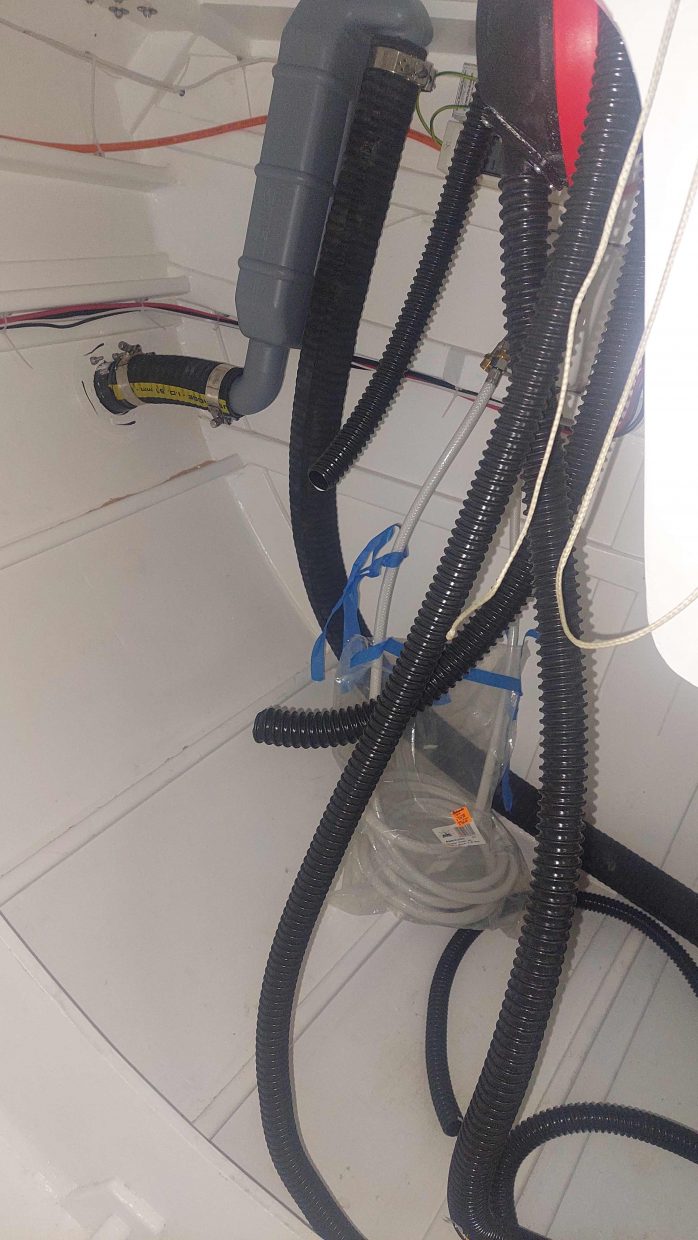
Without a lot of help the task would have been impossible but by the day prior to the crane out all the skin fittings, bilge pump lines fuel lines were finished. As a bonus we ran the engine for a few minutes to clear the fuel lines and ensure a start on the splash day.
Life was less hectic while the yacht was at Woolwich Dock for the keel fitting and antifouling. Due to changes in occupational health requirements since I launchedPassion X it was not possible to do all the work I had planned. Instead I had to contract out more work to the professionals while still keeping a keen eye on the fitting and tolerances. I was able to fit the drive shaft and stern tube bearings with help from the contractors. When at the last moment the Edson radial wheel arrived the yard helped me install the radial wheel and connect the already mounted linear drive. This left the installation of the rudder position indicator to be finished after the launch.
The yard did an outstanding job sanding the Interprotect coating in preparation for a fresh tie coat and many layers of antifouling. By a happy accident the antifouling finished a deeper grey than planned but this went so well with the red stripe that I will keep this colour scheme.
We celebtated the launch at the Dock with a morning coffee before heading off to the mooring for the weekend.
The next day was a Saturday and I spent the day at the riggers yard preparing the mast sections for joining. That joining event was delayed a few days due to other demands at the riggers and so it was mid the next week before the keel was stepped. This delay allowed me to progress the interior in parallel with preparing the mast.
By the end of the week we had the mast installed, the boom connected and the boom bag and mainsail on the boom. A missing vang fitting caused a bit of anxiety particularly as it was lost in the post and a second one had to be sent.
When the vang fitting and a replacement boom end arrived I was able to complete the fig installation and prepare for a trial sail on 12th august. That sail was a non event due to absence of wind but we did get to see the sails hoisted.
The first sail was Wednesday 14th August but the wind was so light the race was shortened to finish just after the first mark. While not a good test we were happy with our speed in such light condition and did finish second fastest in a tiny fleet as most crews avoided the wet windless conditions.
I rested on Thursday. This was my first day off of the boat for many weeks and I enjoyed a casual day with Elaine having coffee and planning next steps.
The delays in the rigging were a blessing in disguise as I was able to progress the interior in a less frentic mode. With help from friends the fridge evaporator was installed in the freezer box allowing the final element of the freezer box to be glued in place and the gaps in the element bogged up for a smooth interior finish. The last bit of help was to mount the stove a day ahead of the final gas fitting inspection. So Monday 12th we fitted the stove and measured the stainless steel surrounds. On Tuesday the 13th we had the final gas fitting inspection and fitted the stainless steel surrounds and on Wednesday 14th we had our first race with hot coffee, hot water and cold Champagne.
After my day of rest I fitted the galley drawers, the compressor access door, the bow anchor roller, the gas lift vang and lots of fiddly finishing touches.
Today the 21st August we had our first real race in winds that reached 24 knots. From the start we took off and lead the fleet. Passion X was always fast on the broad downwind reach but this was another level. By the mark at the Heads we had a four minute gap on the fleet having hit 10 knots GPS speed. The next leg was a single board tight on the wind to Steele Pont where we managed 7.1 knots to windward.
The next windward leg was not as speedy with possible caused being pointing too high or more likely exceeding the wind range of the rather full in the head mainsail. The new mast is much stiffer than Passion X and the crane effect of the backstay above the forestay is also much less so the top bends less. I am certain that a few centimeters out of the top luff round will correct the problem but will give it a few sails to confirm the diagnosis.
I am confident there are a couple more minutes to be gained with this fine tuning but want to experience some mid range winds, not the extremes of the last two weeks.
Please have a look at my facebook page David Edmiston for pictures of the build
A month ago the interior of Passion XI was looking tidy and the hull paintint was progressing well. Since then I have finished painting the topsides and attempted to finish the deck. Wet and cold weather has slowed the deck progress considerably. I was able to get the central part of the deck completed by turning on a heater inside the hull. Enough heat was trapped in the deck plywood to enable the two pack polyurethane to cure but at the extremities the low temperature and wet weather conspired to dull the finish. I tried five times to get a gloss on the bow section above the anchor locker but no matter how early in the day I finished painting it was not early enough to keep the gloss overnight. I think I will give up on this one and either do the best to buff up the five layers of paint or wait till summer and do a gloss coat in the hot weather.
Inside the boat it seems disorganised. Many of the floor are up while we run electrical cabling. simultaneously I am running services like shower pumps, transom shower unit, manual bilge pumps heads, shore power and the engine exhaust. Every service has unique challenges, For example the shore power services required a tiny triangle infill so that we had a flat surface to mount the switches and the transom shower cut out cut partially into a stringer which necessitated a compensating doubler. These need gluing into placee and epoxy coating to match the hull interior finish and protect the new timber.
With many efforts to get the two pack polyurethane finish at a high gloss I had many batches of mixed paint where there was some left over. Rather than waste the paint I have applied it to the underside of hatches where it has given a classy finish. It enabled me to finish the mast base panel without having to mix up special batches of paint.
With the mast base panel all shiny and the anodised alloy base sitting in storage I used some quiet time on Sunday to carefully position the base and drill the four 10 mm diameter holes. I measured the hull from both the bow to the mast step and from the hatch in mid cabin forward. Having reconciled the dimensions I drilled a tiny pilot hole to check, then two then four and all perfectly in position fore and aft and port and starboard. The full size holes were then drilled and the mast base positioned so I could mask off the deck ready for the non skid paint. Today I completed the exercise by epoxying the wooden sub base in position and sikaflexing the alloy base on top. These were then through bolted to squeeze glue from the lower join and sikaflex from the upper one in one operation.
Our closest neighbour is away for a week so on Friday I power planed the rudder blanks down to the aerofoil shape. The two halves are well enough planed to join to the rudder stock but if time permits I may sharpen my trusty block plane and fair the surfaces a little more.
The hatch garage is sort of completed. Again I used left over two pack polurethane to coat the top and while it is a fair finish I may do two more coats for an improved finish and if I have more left over I might paint the unseen underside just for mildew resistance.
The head holding tank is well under way. I have trial fitted it for the pipe routes and now need to install some cleats around the top to finish the top. before the top is fitted the interior will be glassed with epoxy and the inlet, outlet and overflow conections installed.
By my next post we should have made good progress with the electrics, the gas services and the plumbing. Perhaps we will have some light running off the shore power.


Now that summer sailing is winding down I have been concentrating on the boatbuilding. The extra two and a half days a week have been put to good use and for a lot of the period the weather has been very kind.
By Tuesday the fine weather will have given way to a week of rain so I am charging ahead with the hull painting and have just the second top coat to go to finish the topsides.
On top of the to do list is the rudder foil which will be a nice indoors job if the weather is a wet as forecast. Close behind is the ice box foam and the last piece of the galley top. The gallery components are being finished in the workshop so that then can be screwed or glued as appropriate into the hull in a finished condition. That will allow me to paint the surfaces on the flat which gives a better gloss with no chance of runs. I have decided to attach the engine enclosure top and starboard side with screws so that they can be removed in the future if access is needed to the motor. For regular services the smaller access doors will do.
At the rear of the engine enclosure is a removable panel which has yet to be made but the side panels have been finished ready to accept the rear one.
A short list of remaining wood work includes the top hatch cover, a base in one of the hanging lockers, a door for the vanity in the head and laminating the tiller.
When the woodwork is out of the way there is still some glassing to do including inside the water tanks and over the rudder when finished.
On the painting front there are the timber beams to varnish and ths non skid to do on the deck.
As for the work completed in the past three weeks I will include that information in the captions on the pictures below.


In the five weeks since the last post I have been diligently sanding and painting. Along the way there have been some difficulties, some progress and some satisfaction.
As one job list gets completed the next list grows and there are jobs that I am doing that never got on the job list but were front of my mind anyway.
At the end of the last post we had started the stainless steel work. That is now complete. All the holes for the fixing have been drilled, epoxied and re drilled. The holes for the navigation lights have been drilled and the stainless stored until the interior and exterior painting is completed.
If we stick to the fittings these have now progressed beyond the winch bases and chainplates. As stated above all the stainless steel work is drilled as is the stanchons, jack line padeyes, jammers, deck organisers, running gear padeyes, genoa tracks, mooring cleats and fairleads.
Instead of handrails on the cabin top I have installed a grab line the same as on Passion X. This doubles as a jack line to which the short tether can be attached and ensures that you cannot be lost overboard. To go forward of the mast you need the deck mounted jack line and that is also installed, or at least the holes are drilled for the fittings.
On the cabin top I have installed the padeyes for the mainsheet bridle. I have stuck with the Wichard folding padeyes as on Passion X but gone up a size so that it is secured by three 10 mm bolts through 36 mm of cabin top and doublers. They have a working load of four tonnes and a break load of nine tonnes. I have used the same strength for the staysail fixing to the foredeck. Here the 10 mm bolts go through 50 mm of hardwood blocks fastened to a 21 mm thick plywood frame which forms the back of the anchor locker.
With all the fittings I found a few places where additional doublers were needed. Mostly around the stern stainless steel work, the genoa turning blocks and the deck top jacklines. They are all finished now except for a coat of paint on the genoa turning block doublers.
I do have the top coat on the deck. The epoxy undercoat and the first coat of two pack polyurethane went very well. The first coat of polyurethane was 50:50 undercoat and topcoat which gave a good shine and a bit of body. Unfortunately the spray gun failed at the start of the final top coat and during the delay trying to fix it the weather changed for the worse. I had to finish with a smaller than ideal nozzle which made the job take a lot longer than planned.
There is only a short time window to recoat the polyurethane without sanding it all back so I perservered despite the wind. Most of the deck will be recoated with non skid and the only areas where the gloss is important is the cockpit seats and the cabin side. These are passable but it would have been nice to do it all in controlled factory enviromnent.
The interior painting is progressing with many days of sanding, masking up and painting. The gloss has to be sanded of all the old epoxy and each coat has to be sanded down. Any construction glue excess has to be sanded off as this will the the last chance to do any tidying up. In general all the interior surfaces have two coats of high build epoxy primer undercoat, a coat of polyurethane undercoat and a coat of polyurethane topcoat. On the carlins I did an extra coat of undercoat to fill the wood grain more completely and the result is passable. If I was building a show boat I would do two epoxy primer undercoats, two polyurethane undercoats and two topcoats. Ideally the undercoat would have a higher gloss so that the imperfections can be attended to before the topcoats as these are thin and do little filling. In the old days when we were varnishing our moulded scow moths we needed at least seven coats to fill the grain to our satisfaction. Passion XI is however a bit bigger than the scow moth and I don’t have my my father to help.
I have given in to my most cautious self and added two layers of heavy unidirectional glass across the strongback under the quarter berth. That is topped with biaxial and covered with peel ply. I was suprised how little resin was required to thoroughly saturate the cloth and how clean the finish was under the fine textured peel ply.


I have not felt like posting these past two months due to a two week break to sail in the ILCA World Masters in Adelaide and being pretty tired after long days working on the hull.
To me it seems like groundhog day with the same tasks ahead every day and possibly not too interesting for the followers.
In other development we have lost our hull cleaning provider who had been doing a fantastic job over the last year keeping the bottom of Passion X race fit. Since then our performance has been hampered by more than usual hull fouling. Despite one hull clean the hull speed under motor is not up to expectations so this is a work in progress.
Parts are trickling in as available and I have added to my stock of deck fittings, engine exhaust parts and electrical elements. The fuel tank has arrived and will be put in its final resting place as soon as a last coat of epoxy is applied. I had been agonising about how to fill a small triangle between a stringer and the fore and aft side of the quarter berth and with the arrival of the fuel tank I settled for a wedge of foam bedded in epoxy bog so that the gap is filled to avoid any water trap.
I am owed a winch but the holes are drilled and we could launch with one winch short but it is amazing how long the lead time is. The fridge parts are also on back order as is the head basin but these are not holding me back.
A selection of photos from the last month


